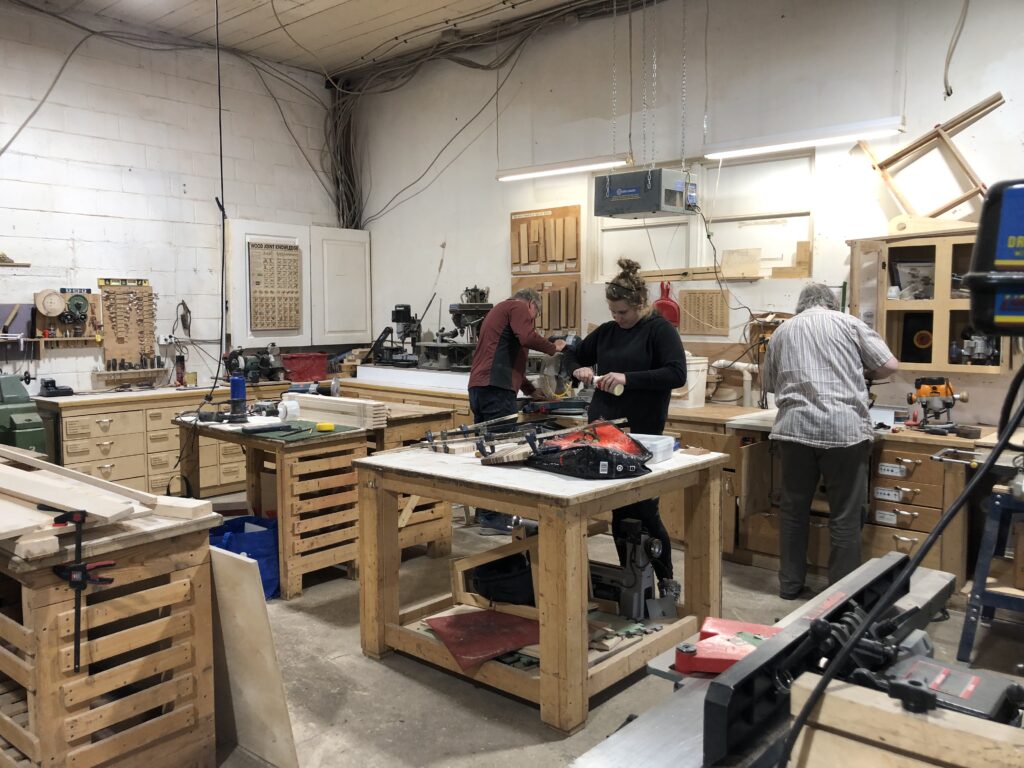
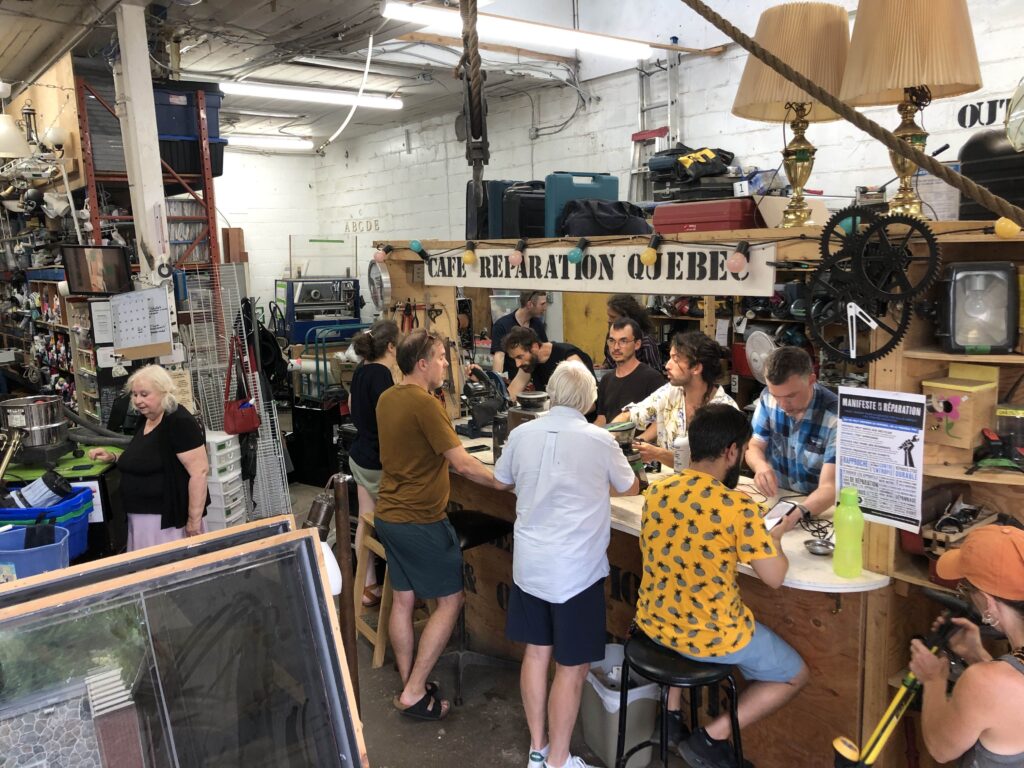
Here is our newest mini-interview with a Québec cooperative. This one is devoted to La Patente, which was founded in Québec City in 2014. We interviewed Guillaume Blanchet, one of the co-op’s co-managers.
Why did you choose the cooperative model (and the specific type of cooperative you chose, e.g., solidarity, worker, producer, user, etc.)?
It was, at the time, one of the easiest ways to register a business like this. The solidarity cooperative was chosen because it was recognized that the main activities were going to be hobbyists and not professionals, and it stays true to this day—although some of our members have been propelling their small business by starting here. Plus, it just makes sense for shared workspaces to have shared ownership by all its members.
What has been the biggest challenge in the process of starting and/or running the cooperative?
The constitution was easy enough, but the decisions at the start have created some friction in the following years: disagreements over conditions of borrowed equipment (founding members more or less pooled their assets to be shared by the community), difficulties in repaying loans and staying solvent, insuring good management without most of the time being able to pay employees. Survival was not so sure around 2019, but, contrary to many businesses, the pandemic was a big help in restructuring the organization. An almost brand-new board was elected less than a month before the first lockdown, and its members used the forced closing to gather (online, of course) and think up a plan to stay afloat. Institutional creditors were also more lenient, and governments were offering financial help.
What is the best advice you received or the advice you would give someone else who is considering starting a cooperative?
Advice we would give: the importance of strong foundations and clear orientations. Be as clear as possible from the start about how you want to define what it means to be a member in your co-op. We are still struggling to this day to signify the responsibilities that come with being a member, as a handful of them are there only because what the co-op offers is inexpensive and they don’t really care or take responsibility for the operations and well-being of the organization. At least, inform new members what it means to be a member—not only to be authorized to use the services provided but to have a shared responsibility in the well-being of the organization and other members of the community. To have more or less strict guidelines regarding how to deal with members who do not adhere to the contract and the people in charge of applying these guidelines is paramount to a prospering social economy business. Removing one bad apple can make the whole basket shine and delight many! It is okay to recognize that your co-op may not be for absolutely everyone.
What are you most proud of about your cooperative?
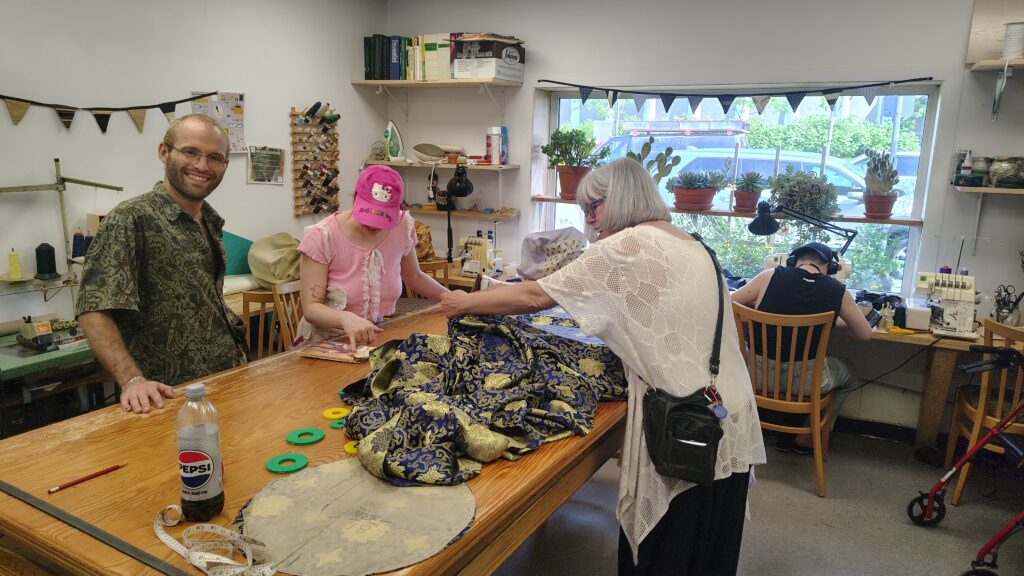
People first come to our spaces to work on their own projects, attracted by the possibility of creating and learning manual skills at a low cost. But, in many cases, they continue coming around and sometimes don’t even touch the equipment. They just enjoy being around other members—sharing a drink or a story, playing a game—because the environment is auspicious to this kind of interaction. And while the services are still developing and improving, people stick around because of the community. We’ve seen people literally metamorphose in this environment, flourish in a renewed way, and some of them even go as far as saying that becoming part of the community of La Patente saved their life. (I am actually one of those.)
We believe this change starts in our communities. How does your cooperative make your community a better place to be?
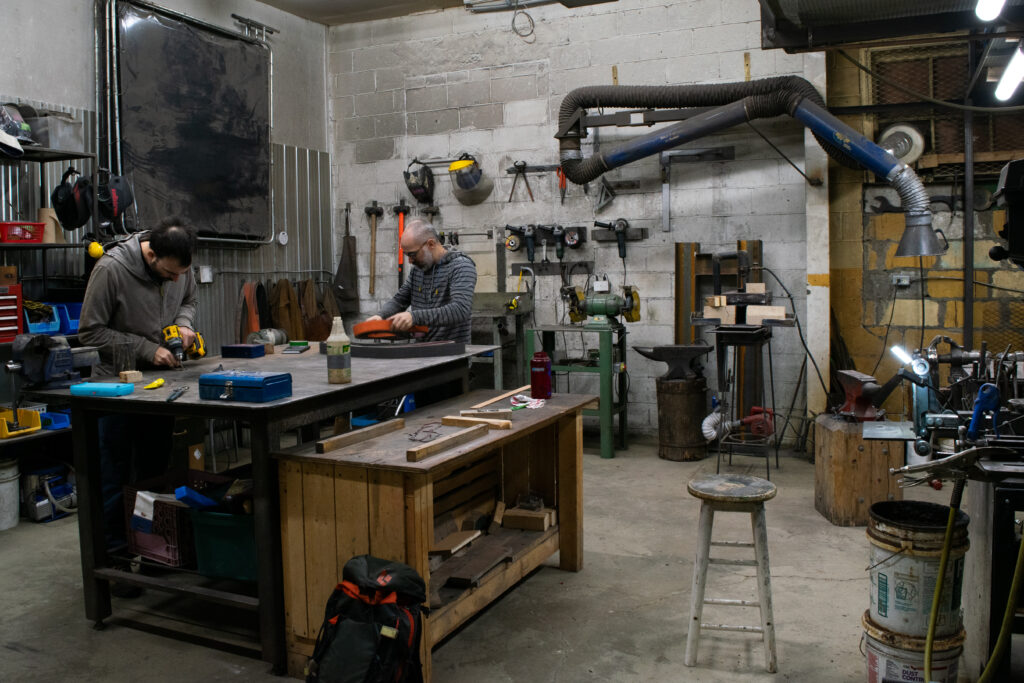
La Patente contributes to a resilient, autonomous, self-aware, and welcoming community. Its many services have bloomed from the core values it always followed, from the ability to build something on shared equipment from reusable materials bought inexpensively at the secondhand hardware store to repairing reliable appliances to extend their useful life instead of buying new cheap disposable ones, sharing knowledge and ideas through entertaining courses, beautifying the neighborhood with a productive garden, and much more. And at the end of the day, sharing a story or two over a game of chess and a glass of homemade kombucha, whether you’ve worked on making something pretty or on maintaining equipment for the benefit of other members, or just came to be around caring people, the community here is welcoming to all who are respectful and open-minded.
Curious to learn more?
To learn more about La Patente, please check out its website, its Facebook page, its Instagram page, and and its LinkedIn page.